
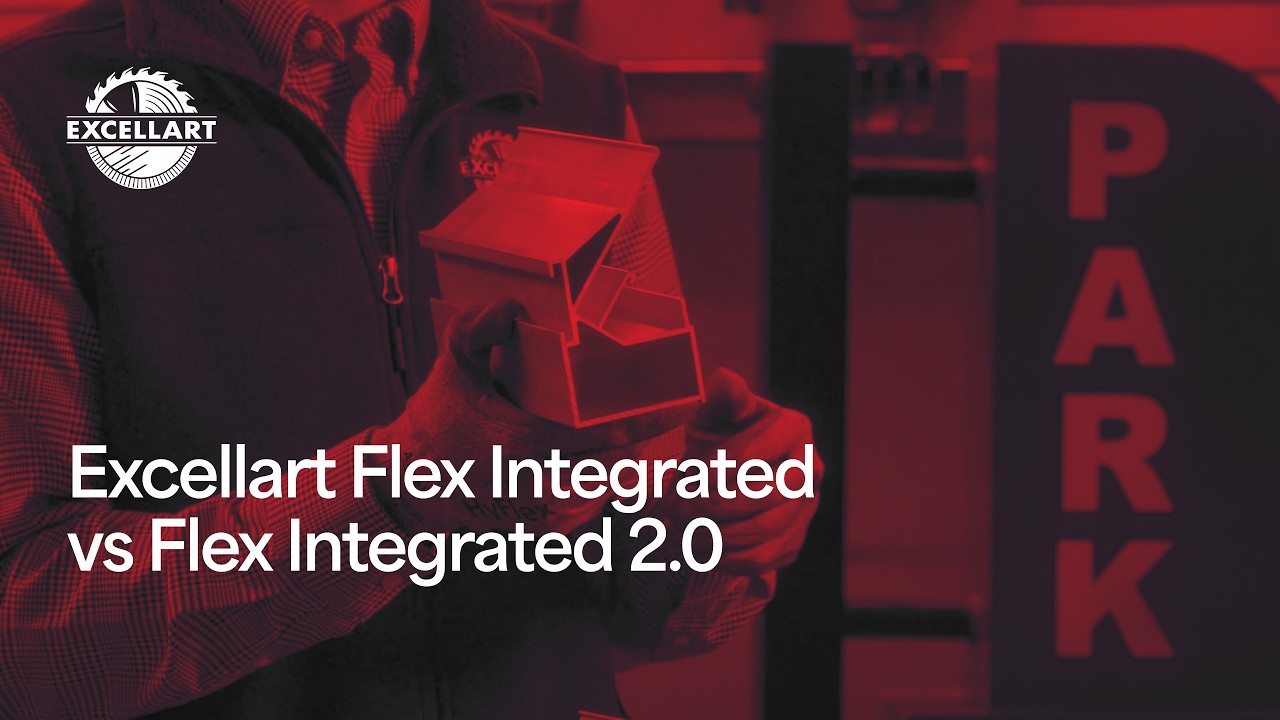
Excellart Sign Products (ESP) makes two integrated flex face profiles: Flex Integrated and Flex Integrated 2.0. Both combine the cabinet’s tube structure and flex face tensioning system into one aluminum extrusion. Both are built for flex face sign cabinets. The right choice comes down to what the cabinet needs most: overall rigidity on a large open box, or the ability to follow tighter curves and more complex shapes.
What an Integrated Flex Face Profile Means
An integrated flex face profile combines the perimeter tube structure and flex face tensioning system in one aluminum extrusion. Instead of fabricating a separate subframe or adding a separate face-retention system, the structural framing and flex face retention are built into the same profile.
Both Flex Integrated and Flex Integrated 2.0 use ESP’s Flex Clip System. The clips can be tightened or released with a standard 7/16-inch (11 mm) socket, keeping face installation and service consistent across both profiles.
Flex Integrated
Nominal depth: 5-1/4 inches
Tube structure: Larger and more resistant to twisting
Best fit: Large, open cabinet geometries, long straight runs, and sweeping curves
The original Flex Integrated profile carries the more substantial tube section of the two. That larger tube structure increases its resistance to twisting under load, making it the stronger choice when overall cabinet rigidity matters most.
Flex Integrated is a good fit for large flex face sign cabinets with open geometry, long straight runs, or sweeping curves where the cabinet needs a stiffer perimeter frame.
Flex Integrated 2.0
Nominal depth: 6 inches
Tube structure: Strong, with geometry optimized for shape work
Best fit: Tight curves, custom curve-cut jobs, and complex cabinet shapes
Flex Integrated 2.0 is shaped to follow tighter curves and more complex perimeters. On projects with curve-cut sections, radius work, or custom-shaped flex face cabinets, the 2.0 profile makes the shape work easier while still holding structural strength.
ESP can CNC kerf-cut both integrated profiles to follow curves, so the shape work is handled before the box ships. The difference is that Flex Integrated 2.0 is better suited when the cabinet has tighter curves or more complex geometry.
Choosing Between Flex Integrated and Flex Integrated 2.0
A quick way to choose:
Choose Flex Integrated for large, open cabinets with mostly straight runs, broad spans, or sweeping curves where overall rigidity is the priority.
Choose Flex Integrated 2.0 for tight curves, custom shapes, complex curve-cut work, or projects where the profile needs to track a more detailed perimeter.
For high-wind environments and demanding installations, ESP also offers the Flex Structural Frame. Its heavy-duty profile and 1/4-inch wall thickness make it suitable for long spans and applications where additional structural strength is the priority
Find the Right Sign Cabinet for Your Project
Use the Excellart Kit Finder to answer a few project questions and find the right kit configuration. For project-specific questions, or just to chat contact the Excellart team at (800) 627-9044 or hello@excellart.com.